

How to Set a Savings Goal: Your Complete Guide to Financial Success
Do you know the number one reason people fail to save money? It’s not a lack of income. It’s not unexpected expenses. It’s the absence of a specific, well-defined goal.
When you don’t know exactly what you’re saving for, saving feels like deprivation. You’re just putting money into an account with no clear purpose, no timeline, and no emotional connection. That’s why so many savings plans fail within the first few months.
But here’s what happens when you set a clear savings goal: everything changes. You stop feeling like you’re depriving yourself and start feeling like you’re building something. You make better spending decisions because you know exactly what you’re trading off. You stay motivated because you can see progress.
That’s exactly what we’re going to help you do today. This guide will walk you through how to set a savings goal that actually works, complete with real examples, practical strategies, and a free Savings Goal Calculator to make the math effortless.
How to set a savings goal starts with naming a specific target, determining the amount needed, and setting a realistic timeline. Calculate your monthly savings requirement by dividing your target amount (minus current savings) by the number of months. Use the SMART framework to make your goal Specific, Measurable, Achievable, Relevant, and Time-bound. A free Savings Goal Calculator can instantly show your monthly target for any timeline and interest rate.
What Is a Savings Goal?
A savings goal is simply a specific financial target you want to achieve by a certain date. It’s not “I want to save more money” — that’s a wish. A real savings goal sounds more like: “I want to have $12,000 saved for a down payment on a home by December 2027.”
Key elements of a savings goal:
- A specific dollar amount
- A target date
- A clear purpose
- A monthly savings target
Your savings goal turns an abstract desire into a concrete plan. It answers the questions: How much? By when? Why? How will I get there?
Expert Tip: Try Free Budgeting Tools for Additional resources for financial planning
Why Naming Your Goal Matters
Research consistently shows that people who name their savings goals are significantly more likely to achieve them. When you put a name on your goal — whether it’s “Emergency Fund,” “Dream Vacation,” or “First Home” — you create an emotional connection that makes saving feel meaningful rather than restrictive .
Think about it this way: Saving $200 a month for “some unknown future thing” feels like sacrifice. Saving $200 a month for “Disney World with my kids next year” feels like an investment in a memory you’ll treasure forever. The money isn’t gone — it’s just in a different form.
The Psychology Behind Goal-Based Saving
Goal-based saving works because it taps into several powerful psychological principles:
Clarity: When you have a specific target, your brain can focus on achieving it. Vague goals don’t activate the same motivational pathways.
Progress tracking: Seeing your balance inch closer to your target releases dopamine, the “feel-good” neurotransmitter that reinforces positive behavior .
Loss aversion: We’re more motivated to avoid losing something than we are to gain something. When you’ve named a goal, spending from that savings account feels like losing progress, which is highly motivating.
Identity shift: When you set a meaningful goal, you start to see yourself as “someone who saves for that thing.” This identity change makes saving feel natural rather than forced.
Why Savings Goals Matter
The Connection Between Goals and Financial Success
People with written financial goals are significantly more likely to achieve financial success than those without them. In fact, research shows that individuals who write down their goals regularly are 42% more likely to achieve them than those who don’t .
Why such a dramatic difference? Written goals:
- Create accountability
- Make the abstract concrete
- Allow you to track progress
- Remind you of your priorities
- Help you say no to non-essential spending
How Goals Change Saving Behavior
Setting a savings goal fundamentally changes how you approach money. Instead of saving what’s left over at the end of the month, you plan your spending around your goal. This is called “paying yourself first,” and it’s one of the most effective savings strategies in personal finance.
When you have a goal, you also make better spending decisions. You’re less likely to impulse buy because you can mentally calculate: “This $50 purchase means I’ll reach my vacation goal two days later.” That trade-off is much clearer when you have a specific target in mind.
Building Financial Confidence Through Goal Setting
Every savings goal you achieve builds financial confidence. You learn that you can save money. You learn that you can plan for the future. You learn that you can control your financial destiny. This confidence snowballs, making it easier to tackle bigger goals and more complex financial challenges.
Expert Tip #1: Start with a small, achievable savings goal if you’re new to saving. A $500 emergency fund or a $1,000 vacation fund that you can reach in 3-6 months. Success breeds success, and nothing is more motivating than hitting your first savings target.
How to Set a Savings Goal in 7 Steps
Step 1: Identify Your “Why”
Before you can set a meaningful savings goal, you need to understand why saving matters to you. This isn’t just about the money — it’s about what the money will do for your life.
Questions to ask yourself:
- What do I truly want that requires money to achieve?
- What would make my life significantly better?
- What financial stress would I love to eliminate?
- What future version of myself do I want to become?
Don’t rush this step. Your “why” is what will sustain you through months of saving. It’s the reason you’ll skip the expensive coffee or choose a staycation over a pricey vacation.
Step 2: Name Your Specific Goal
Now get specific. Turn your “why” into a concrete goal name.
Vague goals: “Save for a car,” “Build savings,” “Buy a house.”
Specific goals: “Save $8,000 for a 2025 Honda Civic down payment,” “Build a $15,000 emergency fund,” “Save $40,000 for a 10% down payment on a $400,000 home.”
The more specific you are, the more real your goal becomes. And the more real it is, the more motivated you’ll be to achieve it.
Step 3: Determine Your Target Amount
Now you need to know exactly how much money you need. This might require some research.
For a house down payment: Research home prices in your target area and determine what down payment percentage you need. For example, a 10% down payment on a $400,000 home = $40,000.
For a car: Research the car you want, including taxes and fees. Decide whether you’re saving to buy outright or for a down payment.
For a vacation: Research flights, accommodations, activities, and daily spending. Add a 15-20% buffer for unexpected costs.
For an emergency fund: Calculate 3-6 months of essential expenses (housing, utilities, food, transportation, insurance).
Don’t guess. Research. The more accurate your target amount, the more realistic your savings plan will be.
Step 4: Set Your Timeline
When do you want to reach this goal? Your timeline affects everything about your savings plan — how much you need to save each month, where you should keep your money, and even which goal is realistic.
Considerations for setting your timeline:
- How soon do you need the money?
- How much can you reasonably save each month?
- What’s the risk of waiting longer?
- Are there seasonal or timing considerations?
Example: If you want to buy a house, you might be working around a lease expiration or school enrollment dates. If you’re saving for a vacation, you might have a specific travel season in mind.
Expert Tip #2: Give yourself a realistic timeline. It’s better to plan for 3 years and finish in 2.5 than to plan for 2 years and fail. Start with your ideal timeline, then test it against your monthly savings capacity. Be willing to adjust.
Step 5: Calculate Your Monthly Savings Target
Here’s where the math gets important. You need to determine exactly how much you need to save each month to reach your goal by your deadline.
The basic formula is simple:
(Target Amount — Current Savings) ÷ Number of Months = Monthly Savings Goal
Example: You want to save $12,000 for an emergency fund in 24 months. You already have $2,000 saved.
($12,000 — $2,000) ÷ 24 months = $416.67/month
This formula works, but it assumes you’re earning no interest on your savings. If you’re saving in a high-yield account or investing for longer-term goals, the power of compound interest can reduce your monthly savings requirement.
That’s where a Savings Goal Calculator becomes invaluable. It factors in your expected interest rate or investment return to give you a much more accurate monthly target.
For example, using the free Savings Goal Calculator on 1OnlineCalculator.com, you can input:
- Your target amount ($12,000)
- Your current savings ($2,000)
- Your timeline (24 months)
- Your expected interest rate (4.7% for a HYSA)
The calculator will instantly show you the exact monthly amount you need to save, accounting for the interest your money will earn along the way.
Step 6: Choose the Right Savings Vehicle
Where you keep your savings matters enormously. The right account can help you grow your money faster, protect it from inflation, and make it harder to spend impulsively.
Short-term goals (under 3 years): High-yield savings accounts (HYSA) earning 4.5-5.0% APY in 2026. These are FDIC-insured, fully liquid, and have no market risk .
Medium-term goals (3-5 years): A mix of HYSA and conservative investments like bonds or CDs. You might also consider a Certificate of Deposit (CD) ladder to lock in higher rates.
Long-term goals (5+ years): Low-cost index funds in tax-advantaged accounts like Roth IRAs or 401(k)s. Historical S&P 500 returns average 10-13% annually over long periods .
Retirement: Tax-advantaged retirement accounts — 401(k) with employer match first, then Roth IRA (2026 contribution limit: $7,000), then additional 401(k) contributions.
Step 7: Create a Tracking System
You need to track your progress. People who track their savings progress are more likely to stay motivated and reach their goals. Here are three effective tracking methods:
1. Use a savings goal calculator: Enter your numbers and track your progress visually. The Savings Goal Calculator on 1OnlineCalculator.com shows your progress bar, months to goal, and completion date all in one view.
2. Use a spreadsheet: Track your monthly contributions, current balance, and progress percentage. (We’ve created a free downloadable Savings Goal Planner — more on that later!)
3. Use your bank’s tracking tools: Many banks offer goal-tracking features in their apps. You can create savings goals, set target amounts, and see your progress.
4. Use a visual tracker: Some people find physical trackers more motivating. Color in a thermometer chart on your fridge or create a milestone chart to celebrate every 10% of the way.
SMART Savings Goals
The SMART framework is one of the most effective ways to set goals in any area of life, and personal finance is no exception. SMART ensures your goals are clear, achievable, and trackable.
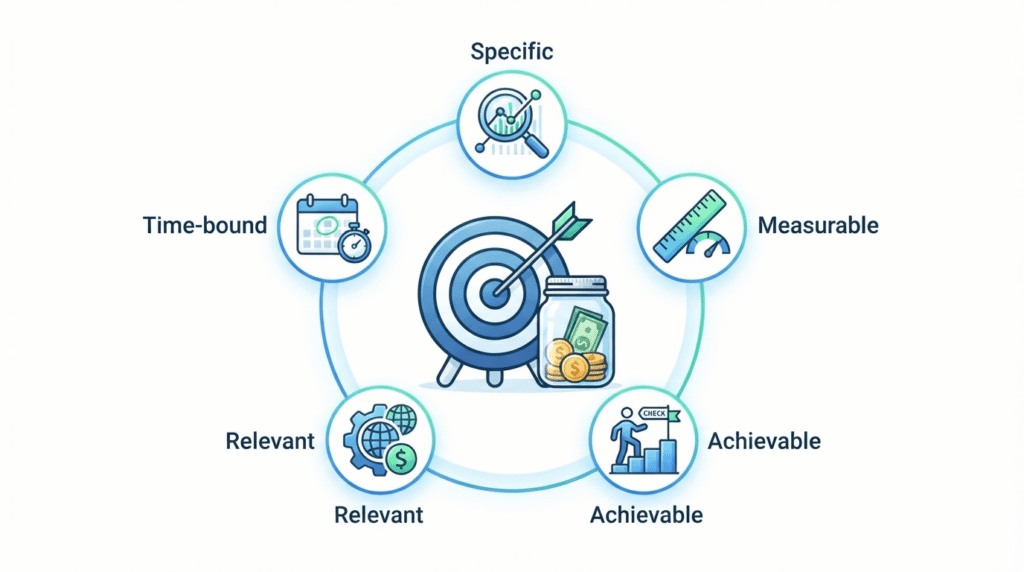
The SMART framework is one of the most effective ways to set goals in any area of life, and personal finance is no exception. SMART ensures your goals are clear, achievable, and trackable.
What Does SMART Stand For?
Specific: Your goal should be clear and detailed. Instead of “save more money,” specify “save $5,000 for a car down payment.”
Measurable: You need to be able to track progress. “Save $417 per month” is measurable — you can check each month whether you hit that number.
Achievable: Your goal should challenge you but remain realistic. If your current savings rate is $100/month, setting a goal to save $2,000/month isn’t achievable.
Relevant: The goal should align with your broader financial objectives and personal values .
Time-bound: Set a deadline. “Save $5,000 in 24 months” creates urgency and focus .
SMART Goal Examples for Every Life Stage
SMART Emergency Fund Goal:
“Save $12,000 for my emergency fund within 24 months. I will save $500 per month, which I can achieve by reducing dining out from 4x to 2x per week and canceling unused subscriptions. I’ll track my progress monthly using the Savings Goal Calculator.”
SMART House Down Payment Goal:
“Save $40,000 for a 10% down payment on a $400,000 home within 3 years. I will save $1,041 per month from my current income and deposit any work bonuses directly into my down payment fund. I’ll check my progress quarterly” .
SMART Vacation Goal:
“Save $3,000 for a 10-day trip to Italy in 18 months. I will save $167 per month by reducing clothing purchases and cooking more meals at home. I’ll track my progress in my savings goal spreadsheet.”
SMART Car Purchase Goal:
“Save $8,000 for a used car purchase in 2 years. I will save $333 per month from my paycheck. I’ll also put 100% of my annual tax refund toward this goal.”
SMART Retirement Goal:
“Save $1,250,000 for retirement by age 65. I will max out my Roth IRA ($7,000/year) and contribute 15% of my income to my 401(k) to stay on track for the 25x rule .”
Common SMART Goal Mistakes to Avoid
- Setting a goal that’s not specific enough. “Save for a house” is not SMART. “Save $40,000 for a 10% down payment on a $400,000 home” is.
- Setting an unmeasurable goal. “Save as much as I can” can’t be tracked. “Save $500/month” can.
- Setting an unachievable goal. If you’re saving $200/month now, jumping to $2,000/month overnight is setting yourself up for failure. Work up gradually.
- Setting a goal that isn’t relevant. If you don’t actually care about the goal, you won’t stay motivated. Save for things that truly matter to you.
- Setting no deadline. Without a deadline, there’s no urgency. You’ll keep putting it off.
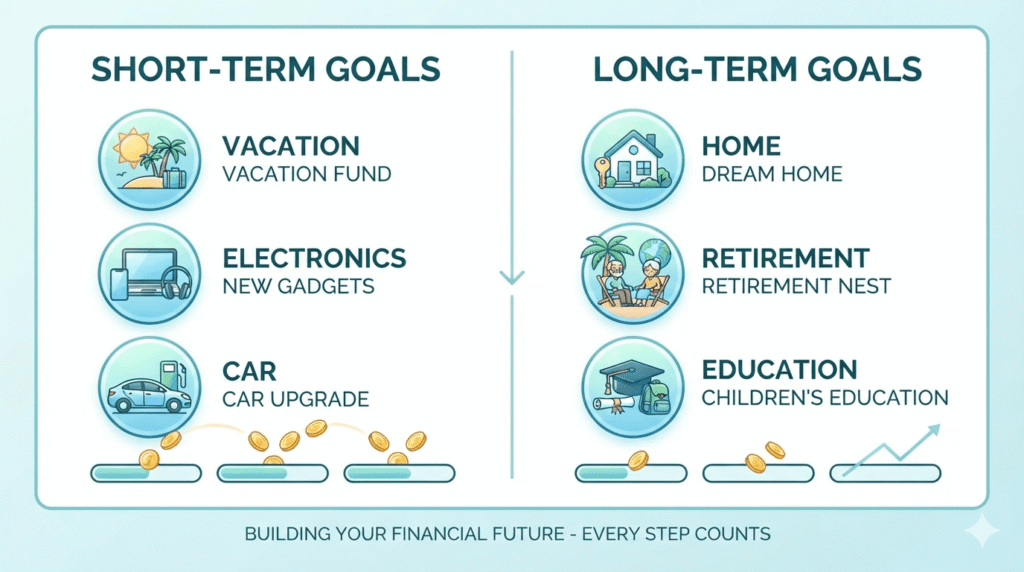
Short-Term vs Long-Term Savings Goals
Understanding the Difference
The main difference between short-term and long-term savings goals is the timeline — and that timeline affects everything from where you keep your money to how much risk you can take.
Short-term goals (under 3 years): Emergency funds, vacation savings, wedding funds in the next year, car down payment .
Medium-term goals (3-5 years): House down payment, major home renovation, starting a business.
Long-term goals (5+ years): Retirement, children’s college education, financial freedom .
Short-Term Savings Goals (Under 3 Years)
For goals you want to achieve within the next 3 years, you need safety and liquidity above all else. The stock market is too volatile over short periods — you don’t want your emergency fund to drop 20% right when you lose your job.
Best places to save:
- High-yield savings accounts (4.5-5.0% APY)
- Money market accounts
- Short-term CDs (6-18 months)
- Treasury bills
Short-term goal example: “Save $5,000 for a vacation to Europe in 18 months. Keep money in a HYSA earning 4.7% APY. Monthly savings target: $265.”
Long-Term Savings Goals (5+ Years)
For long-term goals, you can take more risk because you have time to recover from market downturns. Historically, the stock market has returned about 10-13% annually over the long term, significantly outpacing inflation and savings account rates .
Best places to save:
- S&P 500 index funds (in Roth IRA or 401k)
- Target date retirement funds
- Total stock market index funds
- Diversified portfolio of stocks and bonds
Long-term goal example: “Save $1,250,000 for retirement in 30 years. Invest $1,205/month in a diversified portfolio of index funds expected to return 7% annually.”
Medium-Term Savings Goals (3-5 Years)
For 3-5 year goals, a hybrid approach works best. Keep some money safe in HYSA or CDs, and invest some for growth.
Best places to save:
- 60% HYSA / 40% conservative investments
- CD laddering strategy
- Bond funds
Medium-term goal example: “Save $40,000 for a house down payment in 4 years. Keep $24,000 in HYSA and invest $16,000 in a conservative bond fund.”
Emergency Fund Goals
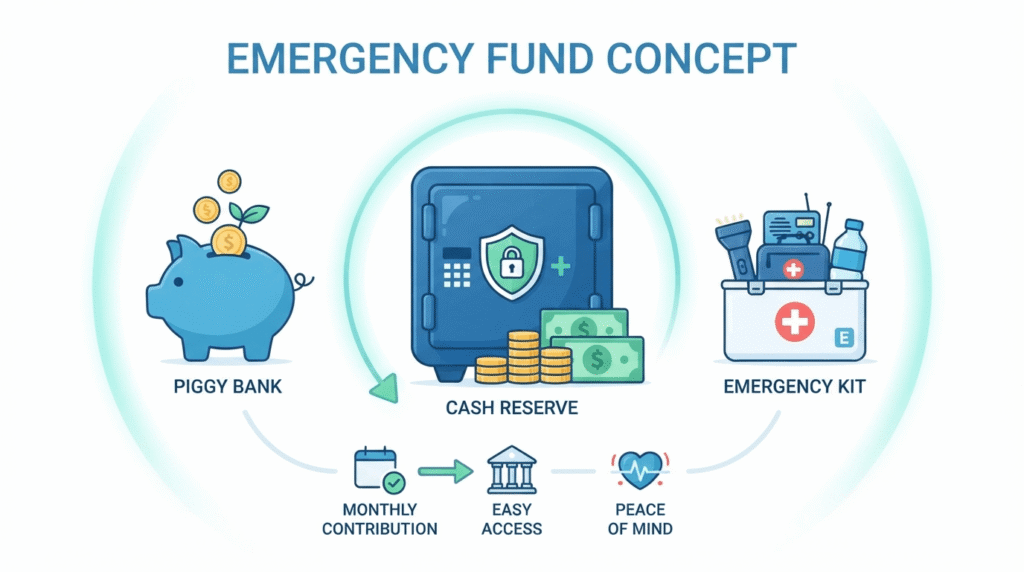
Your emergency fund is the foundation of financial stability. It’s the money that keeps you out of debt when life throws curveballs — job loss, medical emergency, car repair, or home maintenance .
How Much Should You Save for Emergencies?
The standard recommendation: 3-6 months of essential living expenses. This covers housing, utilities, food, transportation, insurance, and minimum debt payments.
Example: If your essential monthly expenses are $3,500, your emergency fund target is $10,500 (3 months) to $21,000 (6 months).
Factors that affect your target:
- Job stability: If you have a stable government job, 3 months might be enough. If you’re self-employed or in a volatile industry, aim for 6-12 months.
- Income: Higher income often requires a larger emergency fund because your lifestyle expenses are higher.
- Dependents: If you have children or other dependents, aim for the higher end of the range.
- Health: If you have health issues, consider a larger fund.
Where to Keep Your Emergency Fund
Keep your emergency fund in a high-yield savings account (HYSA) earning 4.5-5.0% APY in 2026. Not a traditional savings account earning 0.01%. Not invested in the stock market. Not locked in a long-term CD.
Why HYSA for your emergency fund:
- FDIC-insured (safe)
- Fully liquid (you can access it immediately)
- Competitive interest rate
- No market risk
Emergency Fund Savings Strategy
Step 1: Calculate your target amount (3-6 months of essential expenses).
Step 2: Determine your monthly savings capacity.
Step 3: Calculate your timeline using the Savings Goal Calculator.
Step 4: Open a HYSA and set up automatic monthly transfers.
Step 5: Track your progress and celebrate milestones (first $500, first $1,000, 25%, 50%, 75%).
Expert Tip #3: Start with a mini-emergency fund of $1,000 before tackling larger goals. This gives you a small safety net while you save for other things.
Expert Tip #4: Treat your emergency fund as sacred. It’s not for planned expenses, vacations, or wants. It’s only for true, unexpected emergencies.
Saving for a House
Buying a home is one of the largest financial goals most people will ever pursue. A down payment of 10-20% on a $400,000 home means saving $40,000-$80,000 before you even start paying a mortgage.
Down Payment Goals by Home Price
| Home Price | 5% Down Payment | 10% Down Payment | 15% Down Payment | 20% Down Payment |
|---|---|---|---|---|
| $200,000 | $10,000 | $20,000 | $30,000 | $40,000 |
| $300,000 | $15,000 | $30,000 | $45,000 | $60,000 |
| $400,000 | $20,000 | $40,000 | $60,000 | $80,000 |
| $500,000 | $25,000 | $50,000 | $75,000 | $100,000 |
Beyond the Down Payment: Additional Costs
The down payment isn’t the only cost of buying a home. First-time buyers are often surprised by closing costs, moving expenses, and immediate repairs. For a $400,000 home, plan for:
- Closing costs: 2-5% of purchase price ($8,000-$20,000)
- Moving expenses: $1,000-$5,000
- Immediate repairs/updates: $2,000-$10,000
- Mortgage insurance (if under 20% down): $100-$300/month
- Property taxes and insurance: 1-3% of home value annually
Total cash needed for a $400,000 home with 10% down:** $40,000 (down payment) + $12,000 (closing costs) + $3,000 (moving) + $5,000 (repairs) = **$60,000.
First-Time Homebuyer Programs
If saving 20% for a down payment seems impossible, you’re not alone. Many first-time buyers use programs that require less money down.
Options to explore:
- FHA loans: 3.5% down (requires mortgage insurance)
- USDA loans: 0% down (rural areas)
- VA loans: 0% down (military/veterans)
- Conventional 97: 3% down (first-time buyers)
- State programs: Many states offer down payment assistance
Example: With an FHA loan on a $400,000 home, you’d need just $14,000 down (3.5%). This is much more achievable than $80,000 (20%), but you’ll pay mortgage insurance for the life of the loan.
Saving for a Car
Whether you’re buying your first car or upgrading, having a savings goal makes the purchase smoother and more affordable.
How Much Car Can You Afford?
The 20/4/10 rule:
- 20% down payment: Put at least 20% down to avoid being upside down on your loan.
- 4-year loan term: Keep car loans to 4 years or less to avoid paying more in interest.
- 10% of income: Your total car expenses (payment + insurance + gas + maintenance) should be no more than 10% of your gross monthly income.
Example: If you earn $5,000/month, your total car expenses should be under $500/month. With a 4-year loan at 6% interest, that means a car price of about $21,000 (with a 20% down payment).
Down Payment vs. Full Purchase
You generally have two options when buying a car: save for a down payment and finance the rest, or save the full purchase price and buy outright.
Down payment approach:
- Save 20% of the car’s price
- Finance the remaining 80% over 3-4 years
- Lower monthly payment
- Can buy a more expensive car
- Pay interest on the loan
Full purchase approach:
- Save 100% of the car’s price
- No car payment
- No interest paid
- Limited to what you can save
Example: A $25,000 car with a 20% down payment requires $5,000 saved. You finance $20,000 at 6% for 4 years, paying $470/month and $2,600 in total interest. Buying outright requires $25,000 saved but saves you $2,600 in interest.
Hidden Car Ownership Costs
Don’t forget that a car costs more than the purchase price. When setting your savings goal, consider these ongoing costs:
Annual costs for a $25,000 car:
- Insurance: $1,200-$1,800
- Gas: $1,000-$2,000 (depending on commute)
- Maintenance and repairs: $500-$1,000
- Registration and taxes: $200-$500
- Parking and tolls: $200-$1,000
Total annual cost: $3,100-$6,300, or $258-$525/month.
Vacation Savings Goals
Travel enriches your life, but it also costs money. A vacation savings goal helps you make that dream trip happen without going into debt.
Setting Realistic Vacation Budgets
Step 1: Decide where you want to go and for how long.
Step 2: Research costs:
- Flights
- Accommodations
- Activities and tours
- Food and drinks
- Transportation (rental car, trains, Ubers)
- Travel insurance
- Souvenirs and miscellaneous
Step 3: Add a 15-20% buffer for unexpected costs. Something always comes up.
Example vacation budgets:
- Budget camping trip: $500-1,000
- Weekend in a nearby city: $800-1,500
- 7-day beach vacation (Mexico/Caribbean): $2,000-3,500
- 10-day European trip: $3,500-6,000
- 2-week dream vacation (Japan/Australia): $5,000-10,000
Vacation Savings Timeline Examples
| Vacation Cost | Monthly Savings | Time to Goal | Annual Interest |
|---|---|---|---|
| $3,000 | $250 | 12 months | 4.7% |
| $3,000 | $125 | 24 months | 4.7% |
| $5,000 | $417 | 12 months | 4.7% |
| $5,000 | $208 | 24 months | 4.7% |
| $8,000 | $667 | 12 months | 4.7% |
| $8,000 | $333 | 24 months | 4.7% |
Creative Ways to Save for Travel
- Round up spare change: Apps like Acorns or Qapital can round up purchases and send the difference to savings.
- Side hustle: Drive for rideshare, dog sit, or freelance to fund your vacation directly.
- No-spend weeks: One week per month where you spend only on essentials. Save the difference.
- Automated transfer: Set up a separate vacation savings account and automatically transfer money each payday.
- Cash-only categories: Use cash for variable expenses (groceries, dining, entertainment) and save any leftover at month-end.
- Challenge yourself: Try the 52-week savings challenge (save $1 week 1, $2 week 2, etc.) for $1,378 in a year.
Expert Tip #5: For a vacation, consider using a “sinking fund” approach: figure out the total cost, divide by months until your trip, and set up automatic transfers. Having the money before you go means you can enjoy your vacation without worrying about credit card bills when you return.
Wedding Savings Goals
The average wedding in the United States costs over $30,000, making it one of the biggest expenses many couples face.
The Average Wedding Cost
| Category | Average Cost | % of Budget |
|---|---|---|
| Venue/Catering | $10,000-$15,000 | 30-40% |
| Photographer/Videographer | $2,500-$5,000 | 8-12% |
| Wedding Attire | $1,500-$3,000 | 5-8% |
| Flowers/Decor | $1,500-$3,000 | 5-8% |
| Music/Entertainment | $1,000-$2,500 | 3-6% |
| Wedding Planner | $1,500-$3,000 | 5-8% |
| Invitations/Paper | $500-$1,500 | 2-4% |
| Transportation | $500-$1,500 | 2-4% |
| Cake/Desserts | $500-$1,000 | 2-3% |
| Favors/Gifts | $500-$1,000 | 2-3% |
| Miscellaneous | $1,000-$3,000 | 3-8% |
| Total | $22,000-$38,000 | 100% |
Creating a Wedding Savings Plan
Step 1: Decide on your total wedding budget.
Step 2: Break down the budget by category.
Step 3: Determine your timeline (engagement length).
Step 4: Calculate how much you and your partner need to save monthly.
Step 5: Open a joint wedding savings account.
Step 6: Set up automatic transfers from each partner’s account.
Step 7: Track progress and pay vendors in advance when possible.
Example: A $30,000 wedding in 18 months requires $1,667/month in savings (assuming no existing funds). With 2 partners saving, that’s about $833 per person.
Wedding Cost-Saving Strategies
- Choose an off-season date: Winter weddings can cost 20-30% less than summer weddings.
- Get married on a Friday or Sunday: Saturday weddings are the most expensive.
- Cut the guest list: Each guest adds $50-$200 in catering and venue costs.
- Consider a brunch or lunch wedding: These meals cost significantly less than dinner.
- DIY flowers: Buy bulk flowers and create your own arrangements.
- Digital invitations: Save on printing and postage.
- Limit the bar: Open bar for 2 hours instead of 4, or offer a limited selection.
Expert Tip #6: Start saving for a wedding as soon as you’re engaged. Even small monthly contributions add up over a year or two.
Retirement Savings Goals
Retirement might seem far away, but starting early is the single most important factor in building a comfortable retirement. The power of compound interest means that money saved in your 20s and 30s is worth dramatically more than money saved in your 40s and 50s.
How Much Do You Need for Retirement?
The amount you need for retirement depends on several factors:
- Your desired lifestyle in retirement
- Your expected retirement age
- Your life expectancy
- Inflation
- Investment returns
The 25x Rule: A common rule of thumb is to save 25 times your expected annual retirement expenses. This is based on the 4% withdrawal rule, which suggests you can safely withdraw 4% of your retirement savings annually without running out of money.
Example: If you expect to need $50,000 per year in retirement, you would need $1,250,000 saved ($50,000 × 25).
The 25x Rule Explained
| Annual Retirement Expenses | Savings Needed (25x Rule) |
|---|---|
| $30,000 | $750,000 |
| $40,000 | $1,000,000 |
| $50,000 | $1,250,000 |
| $60,000 | $1,500,000 |
| $75,000 | $1,875,000 |
| $100,000 | $2,500,000 |
Retirement Account Types and Strategies
1. 401(k) with employer match:
- Contribute enough to get the full employer match
- The match is a guaranteed 50-100% return
- Pre-tax contributions reduce current taxable income
- 2026 contribution limit: $23,500 ($31,000 if age 50+)
2. Roth IRA:
- After-tax contributions grow tax-free
- No required minimum distributions
- 2026 contribution limit: $7,000 ($8,000 if age 50+)
- Income limits apply
3. Traditional IRA:
- Pre-tax contributions reduce current taxable income
- Taxes paid on withdrawals in retirement
- 2026 contribution limit: $7,000 ($8,000 if age 50+)
4. Roth 401(k):
- After-tax contributions
- Tax-free withdrawals in retirement
- No income limits
Strategy: Max out employer match first, then max out Roth IRA, then increase 401(k) contributions.
Expert Tip #12: Time is your greatest asset in retirement saving. Someone who saves $500/month from age 25 to 65 at 7% return will have $1.3 million. Someone who starts at age 35 with the same contribution will have $627,000. Starting 10 years earlier more than doubles your result.
How Much Should You Save Every Month?
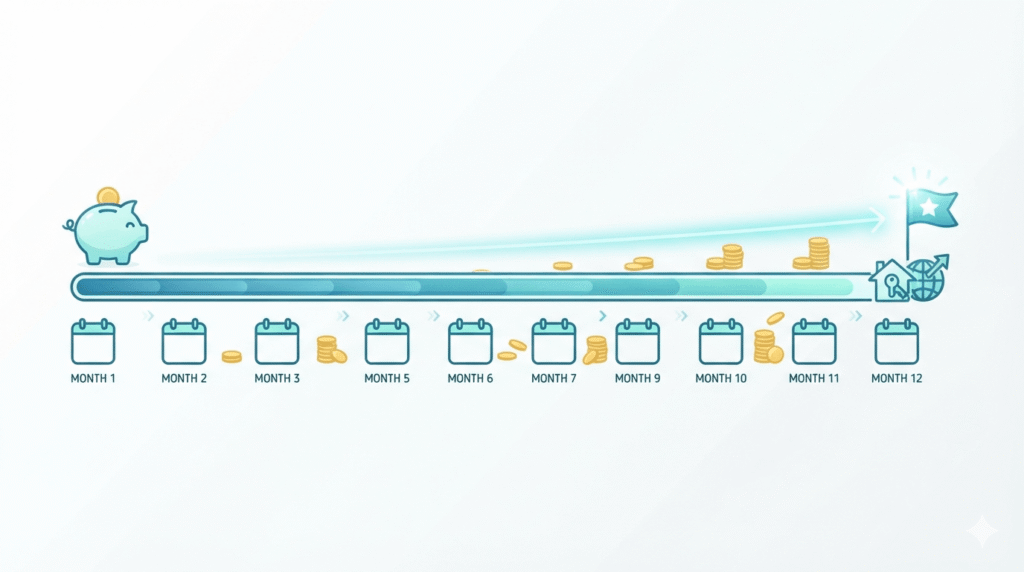
One of the most common questions people ask is: “How much should I be saving each month?” The answer depends on your goals, income, and expenses, but there are some helpful guidelines.
The 50/30/20 Rule
The 50/30/20 rule is a simple budgeting framework that can help you determine your savings rate.
- 50% of income: Needs (housing, utilities, food, transportation, insurance, minimum debt payments)
- 30% of income: Wants (dining out, entertainment, shopping, vacations)
- 20% of income: Savings and debt repayment (emergency fund, retirement, extra debt payments)
Example: With a $5,000 monthly income:
- $2,500 for needs
- $1,500 for wants
- $1,000 for savings and debt
Savings Rate Benchmarks by Income
| Monthly Income | 10% Savings | 15% Savings | 20% Savings | 25% Savings |
|---|---|---|---|---|
| $3,000 | $300 | $450 | $600 | $750 |
| $4,000 | $400 | $600 | $800 | $1,000 |
| $5,000 | $500 | $750 | $1,000 | $1,250 |
| $6,000 | $600 | $900 | $1,200 | $1,500 |
| $8,000 | $800 | $1,200 | $1,600 | $2,000 |
| $10,000 | $1,000 | $1,500 | $2,000 | $2,500 |
Adjusting Your Monthly Savings Goal
Your savings rate isn’t fixed. You can adjust it based on your goals and circumstances:
Increase your savings rate by:
- Getting a raise or promotion
- Starting a side hustle
- Reducing expenses
- Paying off high-interest debt
- Moving to a lower-cost area
Decrease your savings rate temporarily for:
- Major life changes (having a baby, buying a house)
- Emergencies
- Career transitions
Expert Tip #13: Aim to increase your savings rate by 1% each year. Over time, these incremental increases add up significantly without feeling painful.
Savings Goal Examples
Emergency Fund Example
Goal: $12,000 emergency fund (6 months of expenses at $2,000/month)
Current savings: $2,000
Timeline: 24 months
Interest rate: 4.7% HYSA
Using the Savings Goal Calculator, the required monthly savings is approximately $416/month.
Strategy: Set up automatic transfer of $416/month from checking to HYSA. Review monthly and adjust if expenses change.
House Down Payment Example
Goal: $40,000 down payment (10% on $400,000 home)
Current savings: $5,000
Timeline: 36 months
Interest rate: 4.7% HYSA
Using the Savings Goal Calculator, the required monthly savings is approximately $1,015/month.
Strategy: Save $1,015/month in HYSA. Use bonuses and tax refunds to accelerate progress.
Car Purchase Example
Goal: $8,000 for used car purchase
**Current savings:** $1,000
Timeline: 18 months
Interest rate: 4.7% HYSA
Using the Savings Goal Calculator, the required monthly savings is approximately $407/month.
Strategy: Save $407/month in HYSA. Research cars during this time to know exactly what you want when you’re ready to buy.
Vacation Example
Goal: $3,000 for 10-day European trip
**Current savings:** $0
Timeline: 18 months
Interest rate: 4.7% HYSA
Using the Savings Goal Calculator, the required monthly savings is approximately $165/month.
Strategy: Save $165/month in vacation-specific HYSA. Round up purchases to add extra to vacation fund.
Retirement Example
Goal: $1,250,000 retirement savings
**Current savings:** $10,000
Timeline: 30 years
Expected return: 7% average annual return
Using the Savings Goal Calculator, the required monthly savings is approximately $1,120/month.
Strategy: Contribute to 401(k) to get employer match, then max out Roth IRA, then increase 401(k) contributions.
Savings Milestones to Celebrate
Why Milestones Matter
Saving for a large goal can take years. Without celebrating progress along the way, you risk losing motivation. Milestones break your big goal into smaller, achievable steps that give you regular dopamine hits and keep you engaged.
How to create milestones:
- 10% progress increments
- Dollar thresholds (every $500 or $1,000)
- Time-based achievements (every 6 months)
- Behavioral milestones (100 days of consistent saving)
Milestone Ideas for Every Goal
For any goal:
- 10% of target amount
- 25% of target amount
- 50% of target amount
- 75% of target amount
- 100% of target amount
For an emergency fund:
- First $500
- First $1,000
- One month of expenses
- Three months of expenses
- Six months of expenses
For a house down payment:
- First $5,000
- First $10,000
- 25% of target
- 50% of target
- 75% of target
For a car purchase:
- First $1,000
- 25% of target
- 50% of target
- 75% of target
How to Reward Yourself Without Derailing Progress
Celebrating milestones is important, but you don’t want to undo your hard work with an expensive reward. Here are budget-friendly ways to celebrate:
Free or low-cost rewards:
- A nice dinner at home
- A movie night with favorite snacks
- A day trip to a nearby attraction
- A relaxing evening without screens
- A small treat you’ve been craving
Splurge-within-budget rewards:
- A nice meal out (budget $30-50)
- A massage (budget $60-100)
- A new book or small item you’ve been wanting
- A streaming service subscription for one month
Important: The reward should cost less than the milestone amount. If you just hit $1,000 saved, a $200 reward is too much. Keep rewards proportional to your progress.
Expert Tip #14: Share your milestones with someone you trust. Accountability and celebration from a friend or family member can be more motivating than any material reward.
Best Savings Strategies
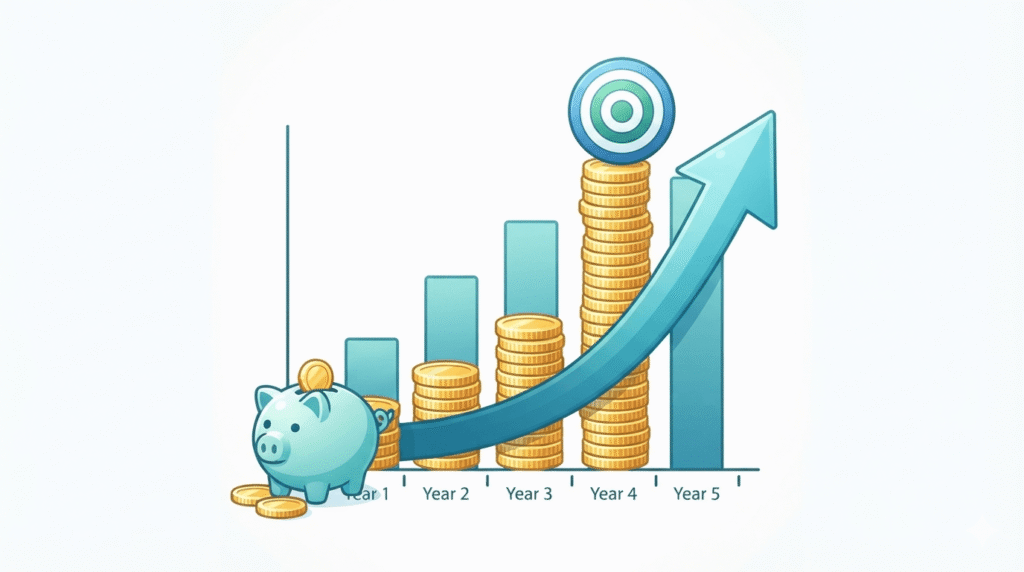
Automate Your Savings
Automation is the single most effective savings strategy. When your savings are automated, you don’t have to exercise willpower every month. The money moves before you have a chance to spend it.
How to automate:
- Set up a direct deposit from your paycheck to your savings account
- Set up automatic transfers from checking to savings on payday
- Use your bank’s auto-save features to round up purchases
- Set up automatic increases (e.g., increase savings by 1% each year)
Why it works: Humans are bad at consistently making good decisions. Automation takes the decision out of the equation.
The Pay-Yourself-First Method
“Pay yourself first” means treating savings like any other bill — it’s non-negotiable and due immediately. Before you spend money on anything else, you pay yourself.
How to do it:
- Calculate your savings target (using the Savings Goal Calculator)
- Set up automatic transfer on payday
- Live on what’s left
Example: If you get paid $5,000/month and want to save $1,000/month, the $1,000 goes to savings immediately. You live on $4,000.
High-Yield Savings Accounts
In 2026, the best high-yield savings accounts (HYSA) are offering 4.5-5.0% APY. This is dramatically better than traditional savings accounts (0.01% APY).
Why this matters for your savings goal:
| Savings Account | Interest Rate | Balance After 1 Year | After 3 Years | After 5 Years |
|---|---|---|---|---|
| Traditional | 0.01% | $12,001 | $36,006 | $60,015 |
| HYSA | 4.7% | $12,566 | $39,498 | $67,517 |
Difference after 5 years: $7,502 more with HYSA — nearly a full extra month of savings.
Best uses for HYSA:
- Emergency funds
- Short-term goals (under 3 years)
- Medium-term goals (3-5 years)
Round-Up and Micro-Saving Apps
Apps that round up your purchases to the nearest dollar and save the difference can help you save without thinking about it.
Popular options:
- Acorns: Rounds up purchases and invests the difference
- Qapital: Creates “rules” for saving (round-ups, “guilty pleasure” triggers, etc.)
- Chime: Automatic round-ups to savings account
- Digit: Analyzes your spending and automatically saves small amounts
Impact: These apps typically save $20-$50/month. While not huge on their own, combined with intentional savings, they can accelerate your progress.
Savings Challenges
Savings challenges make saving fun and structured. They’re especially good for building the savings habit.
Popular challenges:
- 52-week challenge: Save $1 in week 1, $2 in week 2, up to $52 in week 52 = $1,378/year
- No-spend challenge: One day, week, or month with no non-essential spending
- **$5 challenge:** Save every $5 bill you receive
- Envelope challenge: Number envelopes 1-100 and save the corresponding amount each week
Windfall Strategy
Windfalls — bonuses, tax refunds, inheritance, gifts — are opportunities to accelerate your savings goals.
Windfall allocation strategy:
- 50%: Savings/investment goals
- 30%: Debt repayment
- 20%: Fun/treat yourself
Example: A $5,000 tax refund
- $2,500: Emergency fund
- $1,500: High-interest debt
- $1,000: Vacation or fun
Why this works: It accelerates your goals while still allowing you to enjoy the windfall. You’re neither depriving yourself nor wasting all the money.
Expert Tip #15: Use windfalls strategically. A tax refund or bonus can cut months or even years off your savings timeline. Always allocate at least half to savings.
Common Mistakes to Avoid
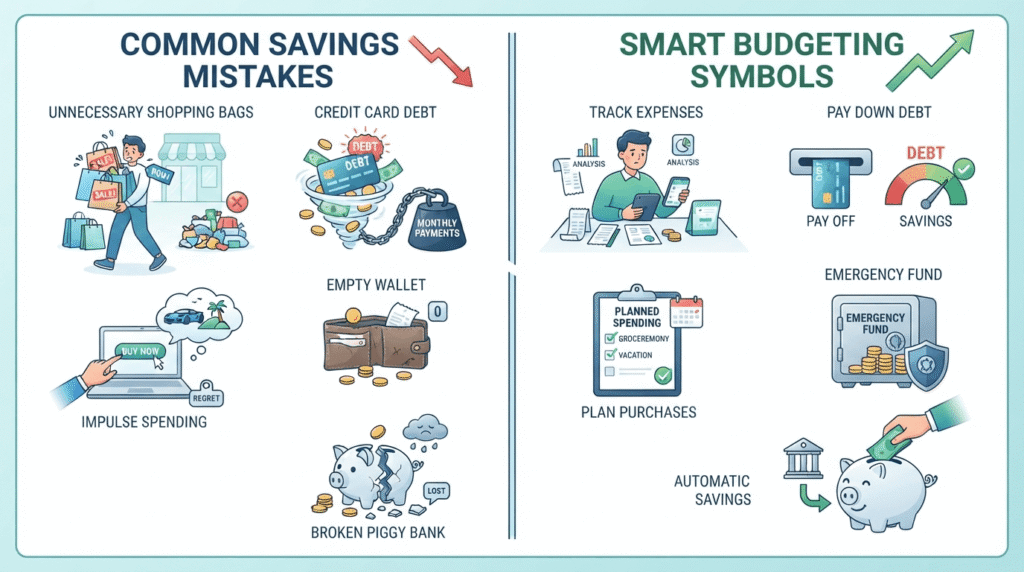
Mistake #1: Setting Vague Goals
The problem: “I want to save more money” is not a goal. Without specificity, you can’t create a plan or track progress.
The solution: Be specific. Name the goal, set a dollar amount, and establish a timeline. Use the SMART framework.
Mistake #2: Unrealistic Timelines
The problem: Setting a timeline that’s too short sets you up for failure. You might give up entirely when you can’t keep up with the required monthly savings.
The solution: Be realistic. Use the Savings Goal Calculator to see the monthly savings required for different timelines. Choose the one that works with your budget.
Mistake #3: Not Tracking Progress
The problem: If you’re not tracking, you don’t know if you’re on track. Without feedback, motivation fades.
The solution: Track monthly. Use the Savings Goal Calculator or a spreadsheet. Celebrate small wins along the way.
Mistake #4: Saving in the Wrong Account
The problem: Your money isn’t growing as fast as it could be. A traditional savings account at 0.01% APY earns practically nothing.
The solution: Use a high-yield savings account for short-term goals. Use index funds in tax-advantaged accounts for long-term goals.
Mistake #5: Forgetting About Inflation
The problem: Inflation erodes the purchasing power of your money. Your $40,000 down payment target today might need to be $44,000 in 3 years.
The solution: Add an inflation buffer to long-term goals. Consider that the price of the thing you’re saving for might increase over time.
Mistake #6: Not Adjusting Goals
The problem: Life changes. Your income, expenses, and priorities change. But your savings goal stays the same.
The solution: Review your savings goals annually and adjust. Increase targets if your income grows. Decrease if your expenses change.
Mistake #7: Ignoring Small Wins
The problem: You only celebrate when you reach the final goal. This can take years, and motivation wanes.
The solution: Celebrate milestones. Every 10% of your goal, every $500 or $1,000 saved, every six months of consistent saving.
Mistake #8: Not Automating
The problem: You’re relying on willpower to save every month. Willpower is finite and often fails.
The solution: Automate your savings. Set up automatic transfers on payday. The money moves before you can spend it.
Mistake #9: Dipping Into Savings
The problem: You use your savings for non-emergencies. This erodes progress and breaks the savings habit.
The solution: Define what an emergency is and stick to it. Have separate accounts for different goals so you don’t accidentally spend from one goal’s fund.
Mistake #10: Saving Too Late
The problem: You delay saving because you think you can’t afford it, don’t know how, or think you’re too young/old.
The solution: Start now. Even small amounts grow through compound interest. The best time to start was yesterday. The second best time is today.
Frequently Asked Questions
How much should I have saved by age 30?
A general rule of thumb is to have the equivalent of your annual salary saved by age 30. For a $60,000 salary, that’s $60,000. This includes retirement savings, emergency funds, and other savings.
What’s a good monthly savings goal for beginners?
Start with 10% of your income. If you earn $4,000/month, save $400. Once you’re comfortable, increase to 15%, then 20%.
How do I save money when I’m living paycheck to paycheck?
Start with micro-saving: $5/day, or $150/month. Look for small expenses to cut — a streaming service, daily coffee, unused subscriptions. Every dollar counts.
What’s the difference between saving and investing?
Saving is putting money in a safe account for short-term goals. Investing is buying assets that can grow over time for long-term goals. Saving is safe; investing has risk but higher potential returns.
How much of my paycheck should I save?
Aim for 15-20% of your gross income. This includes retirement savings and other savings goals. If you can’t reach 20%, start with what you can and increase gradually.
Should I save or pay off debt first?
Save a small emergency fund ($1,000) first, then focus on high-interest debt (credit cards, personal loans) while making minimum payments on lower-interest debt.
How do I save for multiple goals at once?
Use separate accounts or sub-accounts for each goal. Prioritize emergency fund first, then retirement, then specific short-term goals.
What is a high-yield savings account?
An HYSA is a savings account that offers higher interest rates than traditional savings accounts. In 2026, rates are 4.5-5.0% APY, compared to 0.01% for traditional accounts.
How much should I save for retirement?
Aim for 15% of your income, including employer match. Use the 25x rule to determine your total retirement target: 25 × your expected annual retirement expenses.
Is it too late to start saving in my 40s?
No. While starting earlier is better, saving in your 40s can still build a significant nest egg. You’ll need to save a higher percentage of your income (20-25%) to catch up.
How do I save for a down payment on a house?
Determine your target down payment (10-20% of home price), set a timeline (2-5 years), and calculate monthly savings. Use a HYSA for safety and growth.
What’s the 50/30/20 budget rule?
50% of income for needs, 30% for wants, 20% for savings and debt repayment. It’s a simple framework for balancing spending and saving.
How do I track my savings progress?
Use a savings goal calculator, spreadsheet, or bank app. Check monthly. Celebrate milestones. Adjust if you’re falling behind.
Should I use a CD for my savings goals?
CDs can be good for medium-term goals (3-5 years) if you need a guaranteed rate. They lock your money for a set term, so they’re not good for emergency funds.
How much should I save for a vacation?
Research your destination, add a 15-20% buffer, then divide by months until your trip. For a $3,000 trip in 18 months, save $167/month.
What’s the best savings strategy for a car purchase?
Follow the 20/4/10 rule: 20% down payment, 4-year loan term, 10% of income toward total car expenses. Save your down payment in a HYSA.
How do I make saving money a habit?
Automate it. Set up automatic transfers on payday. Start small. Track progress. Celebrate milestones. The habit takes about 3 months to form.
What should I do with a tax refund or bonus?
Allocate 50% to savings, 30% to debt, and 20% to fun. This accelerates your goals while allowing you to enjoy the windfall.
How much emergency fund do I need if I’m single?
3-6 months of essential expenses. If you’re single with a stable job, 3 months might be enough. If you’re self-employed, aim for 6 months.
When should I start saving for retirement?
Now. Even $50/month in your 20s is worth thousands more than $200/month in your 40s due to compound interest. Start as early as possible.
People Also Ask
1. What is the 50/30/20 rule for savings?
The 50/30/20 rule allocates 50% of income to needs, 30% to wants, and 20% to savings and debt repayment. It’s a simple budgeting framework that ensures you save consistently.
2. How do I calculate how much to save each month?
Subtract your current savings from your target amount, then divide by the number of months until your goal. Use a savings goal calculator to account for interest and investment growth.
3. What are the best savings accounts for short-term goals?
High-yield savings accounts (HYSA) offer 4.5-5.0% APY in 2026, are FDIC-insured, and fully liquid. They’re ideal for goals under 3 years.
4. How do SMART goals apply to saving money?
SMART savings goals are Specific, Measurable, Achievable, Relevant, and Time-bound. For example, “Save $12,000 in 24 months” is SMART.
**5. How much should I save for a $400,000 house?**
A 10% down payment on a $400,000 home is $40,000. You’ll also need closing costs (2-5% of purchase price) and moving expenses. Total cash needed: approximately $55,000-$65,000.
6. Is a 401(k) or IRA better for retirement savings?
A 401(k) with employer match comes first — the match is free money. Then max out a Roth IRA for tax-free growth. Then return to 401(k) for additional contributions.
7. How do I stay motivated to save money?
Set SMART goals, track your progress, celebrate milestones, automate your savings, and visualize what you’re saving for. Accountability partners also help.
8. What percentage of income should go to savings?
Aim for 15-20% of gross income. This includes retirement contributions, emergency fund contributions, and other savings goals.
9. How do I save money on a low income?
Save what you can — even $50/month is $600/year. Look for small expenses to cut. Consider side hustles. Every dollar adds up.
10. What are the most common mistakes in setting savings goals?
Vague goals, unrealistic timelines, not tracking progress, saving in the wrong accounts, forgetting about inflation, and not automating savings.
Conclusion
Setting a savings goal is the first and most important step toward achieving financial security. When you know exactly what you’re saving for, how much you need, and by when, saving stops feeling like deprivation and starts feeling like building the life you want.
Key takeaways:
- Be specific: Name your goal, set a dollar amount, and establish a timeline
- Use SMART: Make your goals Specific, Measurable, Achievable, Relevant, and Time-bound
- Calculate your monthly target: Use a Savings Goal Calculator for accuracy
- Choose the right account: HYSA for short-term goals, investments for long-term goals
- Automate: Set up automatic transfers so you save without thinking
- Track progress: Check monthly, celebrate milestones, adjust as needed
- Avoid common mistakes: Vague goals, unrealistic timelines, not tracking
The tools you need are right here. The Savings Goal Calculator at 1OnlineCalculator.com will show you exactly how much to save each month. The Compound Interest Calculator helps you understand the power of investment growth. The Budget Spreadsheet and Monthly Budget Planner will help you manage your spending to free up more savings.
Your next step: Open the Savings Goal Calculator, enter your goal, and see exactly what it takes. Then set up your automatic transfer and start building your future. Every journey starts with a single step — and that step is setting your goal.