
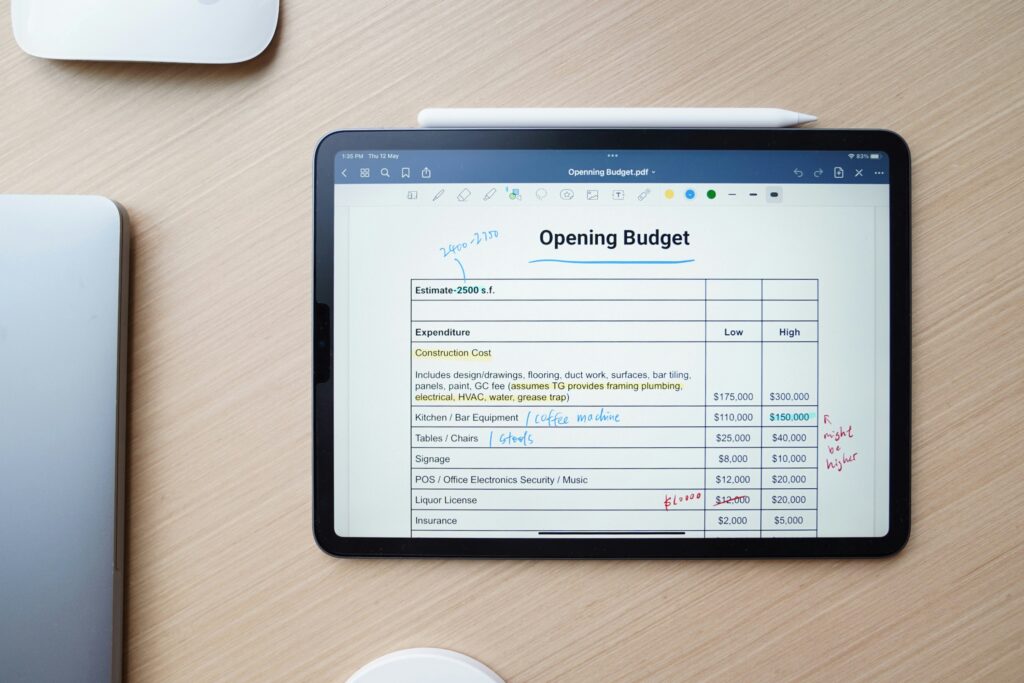
How to Create a Monthly Budget That Actually Works
Most people who try to budget give up within the first month. Not because budgeting is hard — but because they use the wrong method. They track what they have already spent instead of planning where money goes before it leaves their account. That single shift in approach is the difference between a budget that works and one that does not.
This guide walks you through creating a monthly budget from scratch, using proven frameworks that financial advisors actually recommend — and shows you exactly how to use a free budget calculator to make the process automatic.
Why Most Budgets Fail
The most common budgeting mistake is treating a budget as a spending diary rather than a spending plan. Writing down what you spent last month tells you nothing about how to change next month. A working budget is a plan made at the start of the month that assigns every dollar of expected income to a specific purpose before you spend any of it.
The second most common mistake is making the budget too restrictive. A budget that requires perfect behavior every single day will fail. Effective budgets include realistic allocations for fun, eating out, and discretionary spending — not just bills and savings.
Step 1 — Know Your Real Take-Home Income
Before you can budget, you need to know exactly how much money actually hits your bank account each month after taxes, Social Security, Medicare, and any other deductions. This is your net income — the only number that matters for budgeting.
If you are salaried, your pay stub shows your net pay. If your income varies by month, use the average of the last three months as your planning baseline — not the highest month.
Not sure what your take-home pay should be? Use the free salary tax calculator to estimate your federal and state tax deductions and calculate your real monthly net income from any gross salary.
Step 2 — Apply the 50/30/20 Rule
The 50/30/20 rule is the most widely recommended personal budgeting framework in the United States. It divides your after-tax income into three categories:
- 50% for Needs — housing, utilities, groceries, transportation, minimum debt payments, insurance
- 30% for Wants — dining out, entertainment, subscriptions, hobbies, shopping
- 20% for Savings and Debt Repayment — emergency fund, retirement contributions, extra debt payments
On a $5,000 monthly take-home income, this means $2,500 for needs, $1,500 for wants, and $1,000 for savings. If your needs currently exceed 50% of income, the priority is reducing fixed costs — refinancing a car loan, moving to a less expensive home, or eliminating unused subscriptions.
Step 3 — List All Your Monthly Expenses
Write down every fixed expense (rent or mortgage, car payment, insurance premiums, subscriptions) and every variable expense category (groceries, gas, dining, entertainment). Be honest — most people underestimate variable spending by 20-30%.
Pull three months of bank and credit card statements and calculate the average spent in each category. This is your spending baseline. Your budget should reflect reality, not aspiration, as a starting point.
Step 4 — Set a Specific Savings Goal
Vague savings intentions fail. Specific goals with timelines succeed. Instead of “I want to save more money,” set “I will save $6,000 for an emergency fund over the next 12 months by saving $500 per month.”
Use the free budget and savings calculator to calculate exactly how many months it takes to reach any savings target. Enter your goal amount and monthly contribution and the calculator shows your timeline instantly. It also helps you work backward — if you need $20,000 for a down payment in 24 months, it tells you the exact monthly savings rate required.
Step 5 — Track Weekly, Not Monthly
Monthly tracking fails because you only discover problems at the end of the month, when it is too late to adjust. Weekly check-ins — which take less than five minutes — catch overspending in one category early enough to compensate in another.
Every Sunday, add up spending in each budget category for the past seven days and compare to your weekly allocation. If dining is over budget in week two, reduce it in weeks three and four to stay on track for the month.
The Most Common Budget Categories for US Households
- Housing (rent or mortgage): 25-35% of take-home pay
- Transportation (car payment, gas, insurance): 10-15%
- Food (groceries and dining): 10-15%
- Healthcare (insurance, prescriptions): 5-10%
- Utilities (electricity, internet, phone): 5-8%
- Entertainment and subscriptions: 5-10%
- Savings and emergency fund: minimum 10-20%
- Personal and miscellaneous: 5%
How Debt Payments Affect Your Budget
Any existing debt payments — car loans, student loans, credit card minimums — come directly out of your 50% needs bucket. High monthly debt payments are the single most common reason people cannot save effectively.
If a large loan payment is straining your budget, use the loan calculator to see how refinancing to a lower rate or longer term affects the monthly payment. Even a small reduction in monthly debt obligation can free up meaningful room in a tight budget.
Frequently Asked Questions
How much should I save each month?
The minimum recommended savings rate is 10% of your take-home pay for an emergency fund, plus any contribution to a retirement account. The 50/30/20 rule allocates 20% to savings and debt repayment combined. If 20% is not currently achievable, start at 5-10% and increase by 1-2% every three months.
What is a good monthly budget for one person?
A reasonable monthly budget for a single person in the US varies significantly by location. In a mid-cost city, $3,500-$4,500 per month covers rent, food, transportation, utilities, and modest savings. In high-cost cities like New York or San Francisco, $5,500-$7,000 is more realistic. Focus on the percentage allocations rather than absolute dollar amounts.
What is the best budgeting method?
The 50/30/20 rule works well for most Americans because it is simple and flexible. Zero-based budgeting (assigning every dollar a job until income minus expenses equals zero) is more precise but requires more discipline. The best method is the one you will actually maintain consistently over months and years.